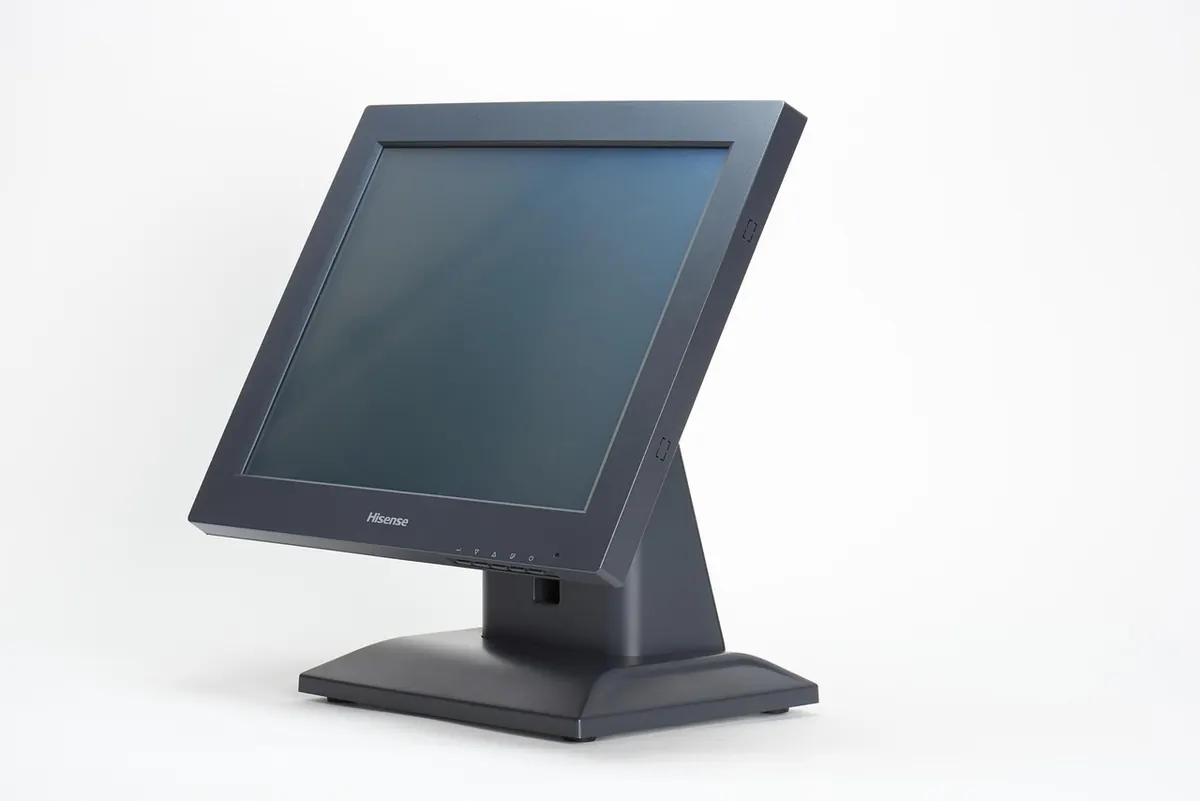
The Saturday before Christmas in a three-register shop on Main Street: the line is eight deep, the card reader says "Processing…", and the cashier is apologizing to strangers. Nothing is actually broken. The store's point-of-sale system is just waiting on a round trip that got longer the moment everyone else in town started shopping too.
Edge computing doesn't fix the internet, and it doesn't speed up your payment processor. What it does is shorten the distance between the small decisions a transaction needs — price, promotion, tax, loyalty tier, SKU match — and the moment the customer taps. In a small store, that can be the difference between a queue that moves and a queue that sulks.
Where the seconds actually go
A single sale can trigger a surprising number of lookups. The scanner reads a barcode, the register asks for the product record, the promo engine checks whether the item is on a two-for-one, the loyalty lookup pulls a customer's tier, the tax table gets consulted, and inventory gets decremented. In a cloud-first setup, most of those requests leave the building, cross the last mile, and come back.
On a quiet Tuesday, that's invisible. During the holiday rush, three things happen at once. The local cable or DSL node gets crowded because every shop, office, and household downtown is online. Your own Wi-Fi gets crowded with staff phones, a guest network, and handheld scanners. And the cloud services you depend on are absorbing peak load from every retailer in the country. Ten lookups at a few hundred milliseconds each adds up to a second or two of dead air per transaction — before authorization even starts.
Payment authorization itself has to reach your processor. That part stays remote, and it should. Everything around it can live on a shelf in the back room.
What an edge node does in a small store
Picture a fanless mini PC, roughly the size of a hardback book, plugged into the same network switch as the registers. It runs a lightweight local service that answers the register's most frequent questions without leaving the building. On a wired LAN, those answers come back in single-digit milliseconds.
Good candidates for the edge
- Barcode-to-SKU lookups and product details for your full catalog
- Base prices, plus promotion and discount rules
- Tax tables, refreshed on a schedule with one named owner
- Employee permissions, discount limits, and manager overrides
- Loyalty tier data (with the authoritative record still in the cloud)
- A local queue that holds completed non-payment writes until the WAN returns
- DHCP and DNS for the register VLAN, so name resolution doesn't stall during an outage
- Health checks and monitoring for registers, printers, and the uplink
Keep these off the edge node
Card authorization, anything that stores a full card number, authoritative gift card balances, and e-commerce order state. If a system is the source of truth for money or for a customer's balance across channels, it belongs with the provider that owns it.
Anything that touches card data changes your PCI scope. If you plan to route authorization or any cardholder data through a store-level box, get a qualified assessor involved before you buy hardware, not after.
Right-size the hardware, then stop thinking about it
You are not building a data center. A modest mini PC with four to eight cores, 16 to 32 GB of memory, and an NVMe drive is more than enough for a store doing a few hundred transactions a day. Skip the GPU. Spend the difference on two things that matter more: a small uninterruptible power supply and a spare unit you can swap in the same afternoon.
Treat the node like the refrigerator — infrastructure nobody thinks about. Mount it, label it, feed it conditioned power, and set alerting so you hear about a failed disk before a cashier does. Back up its configuration somewhere outside the store.
The network work everyone skips
Most "edge projects" that disappoint are really network projects. Registers get their own VLAN and, ideally, their own wired switch ports. Guest Wi-Fi gets its own SSID and a bandwidth cap, so a teenager streaming video in the café can't compete with a card reader. If registers must run wireless, budget one access point per two or three lanes rather than one per store.
Then add a failover path. An LTE or 5G router keeps payments moving when the fiber drops, but only if it is tested. Rehearse it every quarter — plenty of failover setups have quietly expired SIMs or outdated APN settings that nobody notices until December. And schedule your own big uploads, backups, and software updates for closed hours; on a last-mile connection shared with the whole downtown, a mid-afternoon backup is self-sabotage.
A rollout plan you can finish before the rush
- Baseline first. Time tap-to-approved for twenty transactions at 4 p.m. on a busy Saturday, then twenty at a quiet hour. Record the median and the 95th percentile.
- Start with one register. The one that annoys your staff most. One store, one lane, one weekend.
- List every lookup a sale makes, and mark each one as read-heavy or money-authoritative.
- Move the read-heavy ones local. Cache the catalog, prices, promo rules, and permissions. Keep the writes queued.
- Build and rehearse the offline path. Unplug the WAN, ring a full sale, confirm the receipt, the tax, and the inventory reconciliation. Do it while the store is closed.
- Segment the network. Registers on their own VLAN, guest traffic capped, failover tested.
- Freeze updates during peak weeks. No automatic restarts on the afternoon of December 23.
- Give staff a script. "Unplug the network cable, keep ringing" beats improvisation at the counter.
What to measure afterward
Watch the median and the 95th percentile of tap-to-approved time, not the average — the tail is what your customers feel. Track queue length at peak hours, voids and re-scans per hundred transactions, and how often staff complain about "the system." If the 95th percentile barely moves, the bottleneck is somewhere else: usually Wi-Fi, the uplink, or a slow plugin on the register itself. That's useful information too. Now you know where not to spend money next year.
Start with the register that annoys you most
Small-town retail has an advantage that chains envy: you know your peak hours, your staff, and your regulars by name. Use that. Pick one lane, measure it honestly, put a modest box on the shelf, and rehearse the failure case before you need it. The first register will teach you more than any planning document. Then repeat the process on the second one — well before the next holiday season, not during it.
Photo: rafalus / Pixabay