An API that feels instant in a data center can feel broken on a factory floor. That gap is where 5G multi-access edge computing—usually shortened to 5G MEC—earns its keep. It moves compute closer to the device and the radio, and in doing so redraws the latency map your API design was built on.
Most teams meet this problem the hard way. A request that takes 40 ms from a laptop in a downtown office to a cloud region can take 90 to 150 ms from a handheld scanner in a warehouse, a robot arm on a production line, or a vehicle on a highway. Nothing about the API changed. The path did. 5G MEC is the architectural answer to that path problem, and once you understand it, your latency budget stops being a single number and starts being a set of assumptions you can actually design against.
What 5G MEC Actually Is
Multi-access edge computing places compute, storage, and network functions at the edge of the cellular network, often at or near a base station or a local data center. In a 5G deployment, the user plane function (UPF) can be anchored locally, so traffic from a device breaks out to a nearby application server instead of traveling to a centralized packet core. This local breakout is the mechanism that makes low-latency paths possible.
“Multi-access” matters because the same edge platform can serve 5G, Wi-Fi, and fixed access. It is not just a CDN cache. A MEC host can run containers, virtual machines, and lightweight service meshes, which means your API can execute within a few network hops of the client.
It helps to separate MEC from two neighbors. It is not the same as a public cloud region with a CDN in front; those still terminate traffic far from the radio. It is also not the same as running everything on the device. MEC sits between them: it keeps the device thin and the cloud authoritative, while inserting a low-latency execution point directly on the path.
Local breakout, in plain terms
In a traditional mobile network, every packet tunnels back to a central gateway before it reaches the internet or your application. Imagine a city where every parcel must be routed through one sorting facility on the far side of the country before delivery. The sorting is fine; the geography is not.
With MEC, the sorting facility moves into the neighborhood. The UPF is deployed at the edge, and a local data network connects it to your application server. The packet never makes the long haul. The practical effect is that you gain control over something you previously had no say in: the physical distance between your process and the radio serving the device.
Where the Milliseconds Actually Go
A realistic latency budget for a mobile workload has four parts:
- Air interface and scheduling: roughly 1–10 ms in good 5G conditions, more under congestion or weak coverage.
- Radio access and transport to the edge host: single-digit milliseconds when the host is co-located with or near the base station.
- Compute at the edge: your handler, cache lookup, or model inference.
- Return path: the response traveling back over the same chain.
Move that same application to a centralized region and the transport legs alone can add 30–80 ms in each direction before your code runs at all. That is the difference between an interaction that feels native and one that feels laggy—and it is the number that quietly defines whether your product is usable.
Why It Changes API Latency Budgets
A latency budget is a promise. You decide that a tap-to-feedback loop must complete in 100 ms, then you allocate the milliseconds across the stack. Traditional budgets treat the network as a fixed, unavoidable cost—usually the largest single line item. MEC turns that line item into a design variable, and three things follow.
Round trips become cheap, so chatty protocols become viable. If a round trip drops from 60 ms to 8 ms, a multi-step handshake that used to be unaffordable suddenly fits with room to spare. Teams that spent years batching requests, caching aggressively, and designing coarse-grained endpoints can reconsider finer-grained ones—per-item updates, live subscriptions, frequent heartbeats.
The bottleneck shifts from network to compute. When transport is no longer dominant, your own code is. Cold starts, container pull times, and round trips to a distant origin become the visible costs. An edge function that takes 200 ms to initialize will burn through a budget the network just generously handed back.
Variability matters as much as the mean. A 15 ms median is lovely; a 300 ms p99 is what the operator on the floor actually notices. MEC shrinks the tail by removing the long-haul leg most exposed to routing changes, congestion, and peering quirks.
Example: vision-based inspection on a production line
A camera captures 30 frames per second—about 33 ms per frame. A quality check must return a verdict before the next frame arrives, or defects slip past. If inference runs in a distant region and takes 120 ms round trip, the line has to slow down or buffer frames, which defeats the point.
With the model deployed on a MEC host a few hops away, that round trip can land under 20 ms and the line keeps its speed. The API did not get faster in any abstract sense. It got shorter. The same logic applies to AR overlays that must track a worker’s head movement, to vehicle-to-infrastructure messages that must arrive before a braking decision, and to any control loop where the deadline is set by physics rather than by product taste.
How to Redesign an API for a MEC Environment
- Measure the path, not the endpoint. Instrument latency per hop—radio, edge host, origin—so you know which segment you are actually paying for.
- Split state from logic. Keep authoritative data in the central cloud and push stateless decision logic to the edge. Replication, not duplication, is the goal.
- Budget for cold edges. Assume the edge instance may need to start. Pre-warm it, keep images small, and treat initialization time as a first-class line item.
- Design for degradation. The edge will occasionally be unavailable. Define an explicit fallback to a regional or central endpoint, with a stated latency penalty the caller can tolerate.
- Keep sessions anchored. Mobility can move a device between edge hosts. Decide whether your protocol tolerates a handoff or requires session affinity.
- Test under real radio conditions. A lab Ethernet connection will flatter you. Test with congestion, handovers, and weak signal, because that is where the p99 lives.
What MEC Does Not Fix
MEC removes distance. It does not remove the need to design for failure, and it does not make a slow application fast. A bloated query or an N+1 call pattern at the edge is still a bloated query, just closer to the user. Nor does MEC eliminate the air interface, which is often the least predictable part of the chain and the least under your control.
Edge computing rewards teams that know where their milliseconds go—and punishes teams that assumed the network was the only problem.
Where to Start
Before you adopt anything, break your current latency budget into named segments and time them from a real device on a real network. You will likely find that a handful of endpoints cannot meet their deadline no matter how much you optimize the server. Those are your MEC candidates. Move one, measure the improvement, and let the revised budget inform the next decision. The point is not to put everything at the edge—it is to stop paying for distance you do not need.
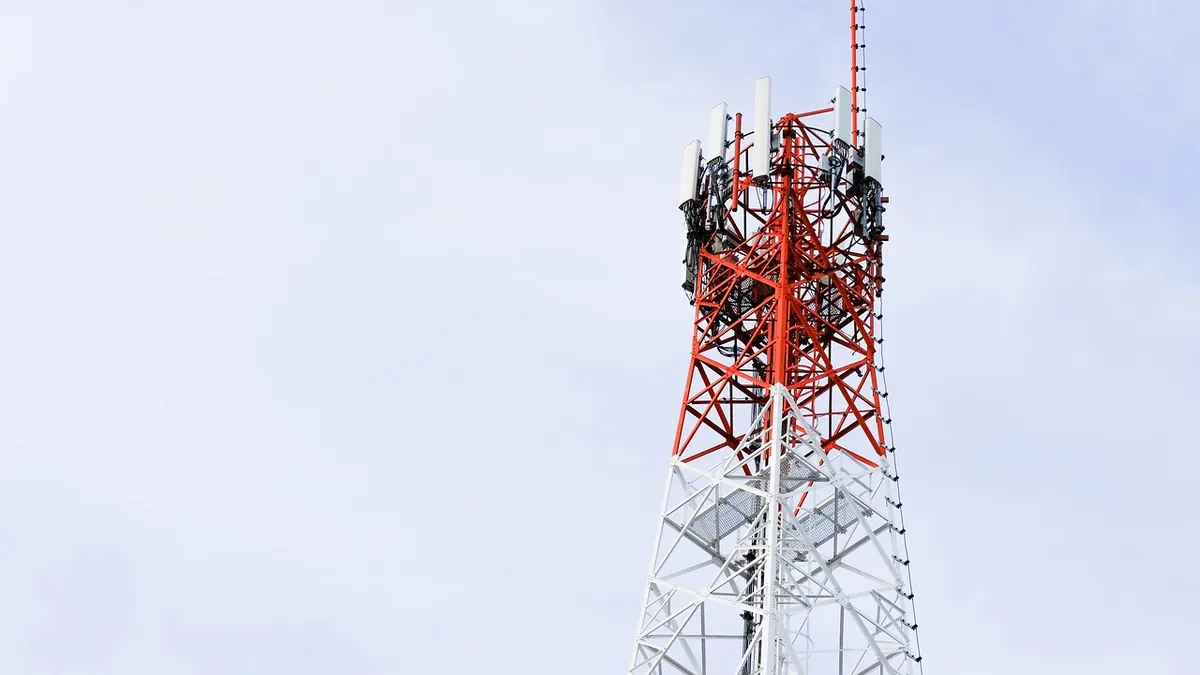
Photo: Ruttinan / Pixabay